

Once you buy via hyperlinks on our web site, we could earn a fee. Right here’s the way it works.
When your canine is sick and gained’t eat, it’s exhausting to not panic. Meals is often the one fixed in a canine’s day — the second they perk up for, the routine they by no means miss. So when a full bowl sits untouched, it could really feel like one thing is deeply fallacious.
A lack of urge for food in canines usually goes hand in hand with sickness. Typically it’s a short-term response to nausea, ache, stress, or fatigue. Different occasions, it’s one of many first indicators {that a} medical concern wants consideration. The exhausting half is understanding which state of affairs you’re in.
This information is designed to stroll you thru the method step-by-step, from the second your canine skips a meal to the purpose the place house care is not sufficient. We’ll cowl what to do first, how you can gently encourage consuming, what to feed a sick canine with no urge for food, and when it’s time to cease troubleshooting and name your veterinarian.
You don’t must do all the things directly. You simply must know what comes subsequent.
Why Sick Canine Cease Consuming
Earlier than leaping straight to meals fixes or house treatments, it’s useful to know why urge for food can disappear when canines are unwell. Urge for food loss is commonly the physique’s response to discomfort.
When a sick canine gained’t eat, it feels completely different than a skipped meal on a typical day. On a wholesome day, canines may flip down meals as a result of they’re distracted or already full. Once they’re sick, refusal tends to look extra deliberate — sniffing the bowl, turning away, or strolling off completely.
Urge for food loss is likely one of the most typical indicators of sickness in canines. It reveals up when the physique is coping with one thing that makes consuming really feel disagreeable, pointless, and even dangerous.
Widespread causes embody:
Abdomen upset or nausea could make consuming really feel like an excessive amount of, even when the sickness is delicate.
Ongoing or continual situations like digestive illness, kidney or liver issues, parasites, or hormonal imbalances usually trigger urge for food loss that doesn’t resolve by itself.
Sickness, fever, or an infection can drain power and suppress urge for food whereas the physique focuses on therapeutic.
Dental ache or mouth discomfort could trigger canines to strategy the bowl and stroll away as a result of chewing hurts.
Medicine unintended effects can boring urge for food, even when the treatment helps in different methods.
Restoration from surgical procedure or harm usually comes with a short lived lack of curiosity in meals.
Stress from being unwell, together with vet visits, confinement, and routine adjustments, also can shut down urge for food.
In lots of circumstances, urge for food loss is the physique’s method of claiming, “I don’t really feel effectively sufficient to course of meals proper now.”
Vital takeaway:A sick canine skipping one meal isn’t robotically an emergency. However repeated refusal, particularly when paired with habits adjustments, deserves nearer consideration.
Canine Don’t At all times Lose Their Urge for food In The Similar Method
Some canines refuse meals completely and gained’t take a single chunk. Others nibble simply sufficient to get by. Some flip down their common meals however settle for treats, mushy meals, or hand-feeding. These variations matter as a result of they inform you how extreme the issue could also be.
A sick canine who gained’t eat however nonetheless drinks water, responds to you, and stays alert may be very completely different from a canine who gained’t eat and seems withdrawn, torpid, or uncomfortable. Habits usually tells you greater than the bowl does.
Indicators that urge for food loss could also be delicate and momentary:
Your canine continues to be ingesting water
Vitality stage is just barely diminished
Rest room habits are principally regular
Curiosity returns briefly, even when they don’t eat a lot
Indicators that urge for food loss could also be extra critical:
Refusal to drink water
Lethargy or weak point
Vomiting or diarrhea
Weight reduction
Hiding, trembling, or indicators of ache
In case your canine is mildly unwell, staying hydrated, and nonetheless principally appearing like themselves, light house treatments for a canine’s urge for food could be cheap to strive for a brief interval. But when urge for food loss comes with worsening signs, ready could make issues extra sophisticated.
So how have you learnt when it’s secure to attend, and when it’s time to behave?
When Not Consuming Turns into An Emergency
When your canine is already sick, an untouched meals bowl feels heavier. You’re not simply questioning in the event that they’re being choosy. You’re expecting indicators, counting hours, and asking your self whether or not you possibly can handle this at house or if it’s time to name for assist.
Not each sick canine who skips a meal is at risk. On the similar time, urge for food loss is one symptom it is best to by no means ignore for too lengthy. The road between “wait and watch” and “name the vet now” often comes all the way down to time, hydration, and the way your canine is appearing total.
How Lengthy Can a Sick Canine Go With out Consuming?
Most in any other case wholesome grownup canines can miss one meal or perhaps a complete day with out critical hurt, particularly in the event that they’re nonetheless ingesting water and are responsive.
However when canines don’t really feel effectively, consuming usually drops to the underside of their precedence listing. Their physique is concentrated on managing discomfort, irritation, or nausea — and meals simply doesn’t register the identical method.
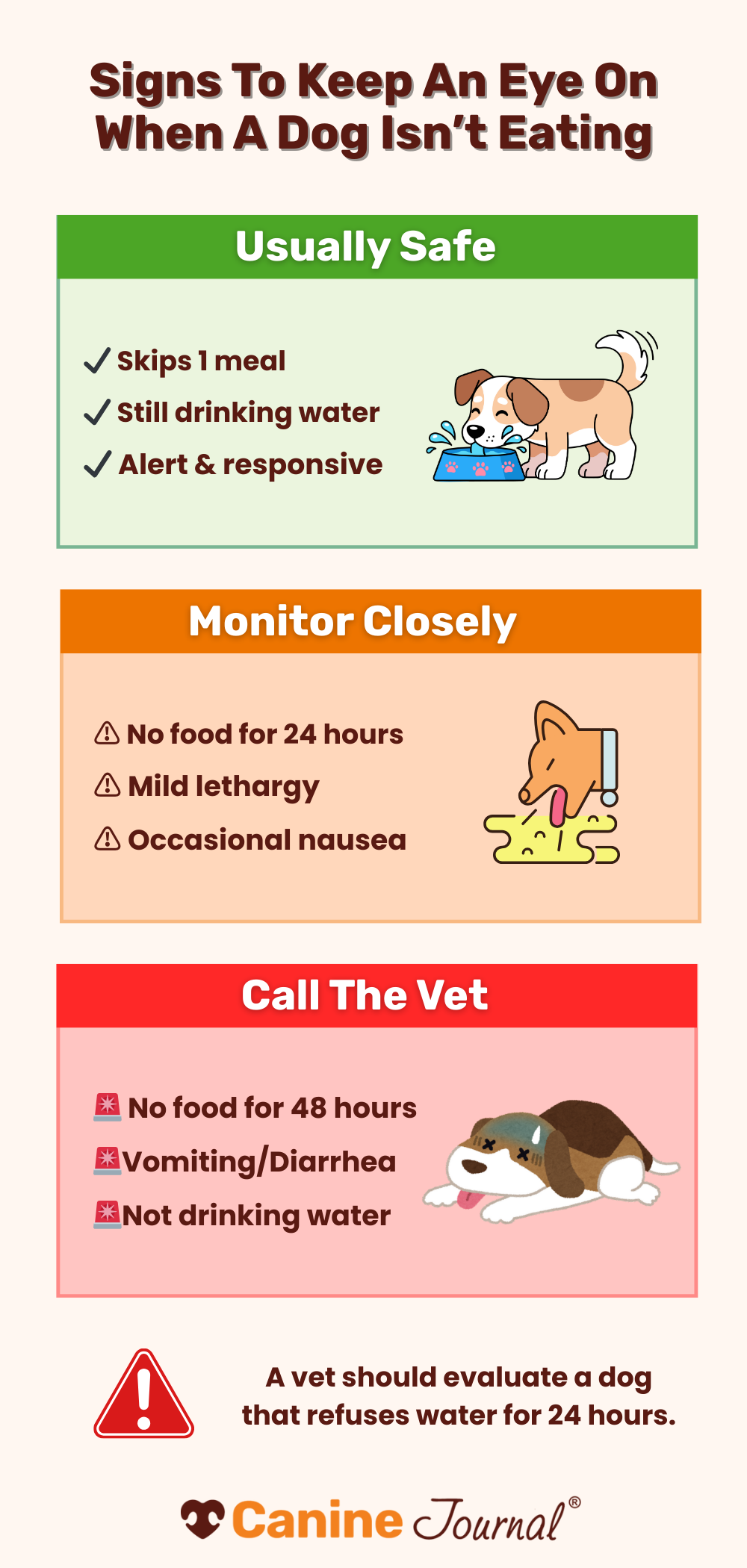
If a sick canine hasn’t eaten for 48 hours, that’s a turning level. At that time:
Dehydration turns into extra possible
Weak point and muscle loss can start
Underlying points could worsen
Restoration turns into tougher
Key level:A sick canine who has not eaten for 2 days wants veterinary steerage, even when they appear principally okay. See our information on how lengthy a canine can go with out consuming to be taught extra.
Infographic: Indicators To Watch For When Your Canine Stops Consuming
Why Consuming Water Issues Extra Than Meals At First
Canine can tolerate quick durations with out meals. They can’t tolerate dehydration. In case your sick canine refuses meals however continues ingesting water, that’s a reassuring signal.
In case your sick canine refuses each meals and water, that’s a medical emergency. Merck Veterinary Handbook warns house owners that water ought to by no means be withheld until their canine is receiving supplemental fluids, resembling both underneath the pores and skin (subcutaneously) or immediately into the blood vessels (intravenously).
Hydration helps:
Circulation
Kidney perform
Digestion
Temperature regulation
Medicine effectiveness
For this reason hydration at all times takes precedence, even when making an attempt house treatments for a sick canine not consuming.
Indicators That Imply You Ought to Name Your Vet Proper Away
Urge for food loss not often occurs in isolation when a canine is actually unwell. It is best to contact your veterinarian promptly in case your sick canine just isn’t consuming and reveals any of the next:
Not ingesting water
Lethargy or weak point
Vomiting or repeated nausea
Diarrhea or constipation
Noticeable weight reduction
Coughing, gagging, or wheezing
Indicators of ache or discomfort
Habits adjustments, resembling hiding, withdrawal, or uncommon quietness
These indicators counsel that urge for food loss is being pushed by sickness, ache, or dehydration that can not be safely managed at house.
Puppies, Seniors, and Chronically In poor health Canine Want Sooner Care
Some sick canines ought to by no means “wait it out.” For these canines, even a short lack of urge for food deserves a name to the vet.
Puppies have restricted power reserves and may decline rapidly.
Senior canines usually tend to have underlying situations that have an effect on urge for food.
Canine with diabetes, kidney illness, liver illness, or most cancers ought to be evaluated sooner fairly than later.
Backside line:In case your intestine says one thing is fallacious, belief that feeling. You reside along with your canine. You understand what’s regular for them. When unsure, it’s at all times okay to ask for assist.ng isn’t proper, belief them.
In case your canine is secure, hydrated, and alert, you possibly can transfer into light feeding help.
How To Get A Sick Canine To Eat (A Step-by-Step Plan)
When a canine refuses meals, most of us wish to repair it straight away. However consuming can’t be rushed when a canine isn’t feeling effectively. The purpose isn’t to power meals down their throats. It’s to make consuming really feel comfy once more. These steps begin easy and turn out to be extra hands-on provided that wanted, so you possibly can cease as quickly as one thing works.

Step 1: Give It A Little Time
In case your canine skipped one meal however continues to be ingesting water, alert, and principally appearing like themselves, it’s usually okay to pause earlier than leaping in. Canine aren’t wired to eat on a strict schedule. Once they’re coping with stress, delicate nausea, or fatigue, urge for food is commonly the very first thing to fade.
Throughout this ready interval, give attention to the larger image. What issues most is that:
Your canine continues to drink water
There is no such thing as a vomiting or diarrhea
Their power stage is near regular
If these indicators keep regular, giving your canine a bit respiration room can forestall pointless stress round meals. Nonetheless, ready just isn’t applicable in case your canine is weak, dehydrated, or refusing water.
If ready doesn’t assist, it’s time to regulate the meals itself.
Step 2: Make Meals Odor Stronger & Extra Interesting
When canines are sick, their sense of scent usually dulls. Since scent performs an enormous function in urge for food, boosting aroma and palatability could make a shocking distinction.
Do this first:
Heat your canine’s meals barely in your microwave, however be sure it’s by no means scorching
Add a small quantity of heat water or broth
Stir their meals to launch the scent
Even canines who refuse chilly meals could take an curiosity as soon as the scent turns into stronger.
Security notice: At all times verify the temperature along with your finger earlier than providing meals.
If scent alone doesn’t work, a small enhance could assist.
Step 3: Add A Small Temptation (Combined In)
If warmed meals nonetheless isn’t tempting, a small addition could make a distinction.
Secure short-term choices embody:
Plain boiled or shredded rooster
Meat-based child meals
Low-sodium bone broth
Combine these into your canine’s common meals fairly than serving them alone. Why? The concept is to assist your canine begin consuming once more with out creating choosy consuming habits as soon as they get well. Hold parts small and improve provided that wanted.
In case your canine nonetheless hesitates, consolation will be the concern.
Step 4: Strive Hand-Feeding
Some sick canines don’t refuse meals as a result of they aren’t hungry. They refuse it as a result of they really feel uncertain, uncomfortable, or unsettled. In these moments, hand-feeding can present reassurance and assist decrease their guard.
Providing a couple of bites out of your hand could make consuming really feel safer, particularly in case your canine is anxious or not feeling like themselves. Usually, as soon as they take a couple of bites this fashion, they’ll proceed consuming on their very own.
In case your canine turns their head away or appears uncomfortable, cease. Hand-feeding ought to really feel supportive, not pressured.
If consuming nonetheless feels troublesome, have a look at the atmosphere.
Step 5: Alter The Feeding Setting
The place your canine eats can matter simply as a lot as what they eat. Sick canines are extra delicate to noise, motion, and stress, and even minor disruptions could be sufficient to close down urge for food.
Veterinary Companion recommends feeding your canine in a quiet area away from different pets and family exercise. Sitting close by with out hovering can assist some canines really feel safer. Protecting meal occasions calm and predictable provides your canine one much less factor to fret about once they’re not feeling effectively.
If none of those steps work, pause earlier than escalating.
Step 6: Syringe Feeding Is A Final Resort
Utilizing a syringe to supply liquids or watered-down meals ought to solely be thought-about in case your canine has gone 48 hours with out consuming and your veterinarian has mentioned it’s secure to take action.
This methodology carries dangers if completed incorrectly, together with choking or aspiration. It’s not meant to interchange consuming, and it ought to by no means contain forcing meals right into a resistant canine’s mouth.
If syringe feeding turns into essential, your veterinarian ought to information you thru precisely how you can do it safely.
Pure House Treatments For A Sick Canine Not Consuming
These treatments are supposed to help urge for food, not substitute veterinary care. In case your canine’s situation isn’t enhancing, house treatments ought to by no means delay a name to the vet.
1. Ginger For Delicate Nausea
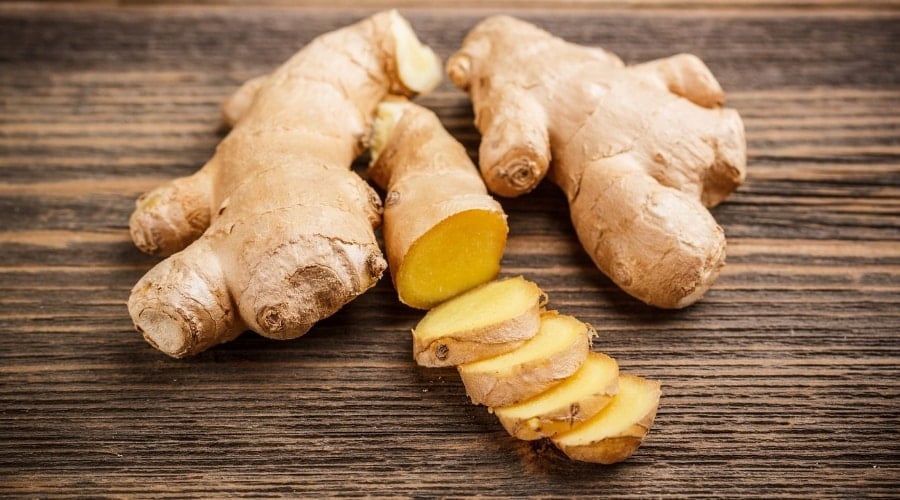
Ginger is usually used to assist with nausea, and in small quantities, it may be useful for some canines who really feel queasy and tired of meals.
When ginger could assist:
Delicate abdomen upset
Movement-related nausea
Occasional vomiting with out different signs
Methods to provide it safely:
Use plain, contemporary ginger or ginger powder
Combine a really small pinch into meals or broth
Begin low and cease if vomiting or discomfort worsens
Vital: Ginger shouldn’t be used in case your canine has bleeding issues, is on sure drugs, or has ongoing vomiting. At all times use warning.
2. Chamomile Tea For Upset Stomachs & Stress
Chamomile has delicate calming properties and should assist canines who’re nauseous because of stress or digestive discomfort.
The way it could assist:
Light abdomen soothing
Stress-related urge for food loss
Delicate intestinal irritation
Methods to use it:
Brew chamomile tea and let it cool utterly
Provide a small quantity blended into meals or water
By no means power your canine to drink it
3. Bone Broth As Light Assist
Bone broth is likely one of the only house treatments for enhancing a canine’s urge for food as a result of it combines hydration, scent, and vitamin in a single step. Simply you’ll want to select a dog-friendly bone broth that’s low in sodium and freed from seasonings, resembling garlic or onions.
Why it helps:
Robust scent encourages curiosity
Simple to digest
Provides moisture and electrolytes
You may pour a small quantity over meals or provide it alone in case your canine refuses solids.
What To Keep away from With “Pure” Treatments
Not all the things labeled pure is secure for canines. It’s finest to keep away from:
Important oils added to meals
Natural dietary supplements that aren’t accredited for pets
Apple cider vinegar
Human dietary supplements or teas with unknown substances
A Be aware On Dietary supplements & Urge for food Boosters
Over-the-counter dietary supplements claiming to “restore urge for food” usually lack regulation and may masks signs with out addressing the trigger. If urge for food loss lasts greater than 48 hours, dietary supplements should not the reply.
Key takeaway:Pure treatments can assist when urge for food loss is delicate and short-lived. They need to by no means delay veterinary care when signs persist or worsen.
What To Feed A Sick Canine With No Urge for food
When you’ve adjusted the way you’re providing meals, the following step is deciding what to place within the bowl. When a canine is sick, the fallacious meals could make nausea worse, whereas the suitable one can assist them tolerate consuming once more, even in small quantities.
This part focuses on what to feed a sick canine with no urge for food, beginning with the simplest choices to digest and shifting towards meals that help restoration as urge for food slowly returns. Consider these as short-term selections meant to get your canine via sickness, not long-term weight-reduction plan adjustments.
1. First, Focus On Odor & Texture
When canines really feel unwell, dry kibble is commonly the very first thing they reject. Odor, moisture, and softness could make meals really feel extra manageable.
Moist pet food is commonly the simplest place to begin. It smells stronger, has a softer texture, and provides moisture. Warming it barely or mixing in a bit heat water or broth can assist launch the aroma.
If that also doesn’t work, meat-based child meals can assist break the barrier. Select single-protein choices like rooster, turkey, or lamb. Child meals is straightforward to lick and swallow, which makes it helpful for canines with nausea or mouth ache.
When strong meals isn’t taking place in any respect, bone broth can assist maintain issues shifting. It gives hydration, light vitamins, and a scent that usually sparks curiosity. Use low-sodium broth with no seasoning and begin with small quantities.
2. As soon as Your Canine Is Keen To Eat, Hold It Bland
In case your canine will eat a bit however not a lot, that is the time to stay with easy, light meals.
Plain shredded rooster is straightforward to digest and interesting. It ought to be boiled, unseasoned, with the pores and skin and fats eliminated, then shredded into small items.
A easy rooster and white rice recipe is one other secure possibility. It’s low in fats, simple on the abdomen, and easy to portion. Use solely plain boiled rooster and white rice, with no oils, butter, or seasoning.
Plain canned pumpkin can help digestion and assist regulate stool. Use solely plain pumpkin, not pie filling, and begin with 1 to 4 tablespoons, relying in your canine’s measurement.
3. As Urge for food Returns, You Have a Few Extra Choices
Some canines want selection as their urge for food slowly comes again. Good selections embody:
Plain oatmeal cooked in water could be simple to tolerate.
Small quantities of canned tuna or mackerel packed in water could be blended into different meals.
Totally cooked, plain mashed potatoes may additionally work.
These ought to be momentary helps, not long-term meals.
How A lot To Feed Whereas Your Canine Is Sick
When urge for food is low, small, frequent parts are simpler to tolerate than massive, rare ones.. Provide a couple of bites at a time, wait a couple of hours, and check out once more in case your canine reveals curiosity. Cease in the event that they flip away. Forcing meals can worsen nausea and make future meals tougher.
What NOT To Feed A Sick Canine With No Urge for food
When your canine isn’t consuming, keep away from meals that may worsen nausea, irritate the abdomen, or sluggish restoration.
Wealthy or fatty foodsFried meals, fatty meat trimmings, gravy, drippings, and cheese-heavy meals can set off vomiting, diarrhea, and even pancreatitis.
Meals with garlic, onion, or heavy seasoningGarlic and onions are poisonous to canines, even in small quantities, and are widespread in leftovers and human broths. In line with the ASPCA, these substances can harm crimson blood cells and may by no means be fed to canines.
Milk and dairy productsMany sick canines are lactose illiberal. Dairy could cause vomiting, gasoline, and diarrhea, even in small quantities.
Processed meatsBacon, ham, sausage, and pepperoni are excessive in fats, salt, and preservatives and may worsen dehydration and abdomen irritation.
Sugary or artificially sweetened foodsSugar presents no profit, and meals containing xylitol are extraordinarily harmful and may trigger life-threatening drops in blood sugar.
Vital reminder:When unsure, skip it. Easy, bland meals are at all times the most secure selection for a sick canine.
Once more, Don’t Neglect Hydration
When your canine isn’t consuming, it’s simple to fixate on the meals bowl. However hydration is definitely extra pressing than energy, particularly in the course of the first day or two of sickness. A canine can go longer with out meals than with out water, and dehydration could make each different symptom worse.

How Lengthy Can a Canine Go With out Water?
Most canines can tolerate a brief interval of diminished meals consumption, however going with out water for even a day can begin to trigger issues. Dehydration impacts circulation, digestion, kidney perform, and total restoration.
Key level:A canine that refuses water for twenty-four hours ought to be evaluated by a veterinarian.
How To Encourage A Sick Canine To Drink Water
By no means power water into your canine’s mouth. That may result in aspiration pneumonia, which is extraordinarily harmful. As a substitute, strive light encouragement.
Secure methods to extend water consumption embody:
Providing contemporary, cool water extra often
Letting your canine lick ice cubes
Providing water out of your hand or fingers
Including a small quantity of low-sodium bone broth to water
Utilizing vet-approved electrolyte options if beneficial
Typically altering the bowl, the placement, or the water temperature is sufficient to spark curiosity.
Indicators Of Dehydration To Watch For
In case your canine isn’t consuming, maintain an in depth eye out for dehydration. These indicators can develop quietly.
Widespread indicators embody:
Dry or sticky gums
Lethargy or weak point
Lack of pores and skin elasticity
Sunken or dull-looking eyes
Dry nostril
Panting with out exertion
In case you discover any of those indicators of dehydration, particularly mixed with refusal to drink, veterinary care is required instantly.
Attempting house treatments could be useful when urge for food loss is delicate and short-lived. However there are clear moments when ready is not the most secure selection. Realizing when to cease troubleshooting at house and contain your veterinarian can forestall a minor concern from turning into a critical one.
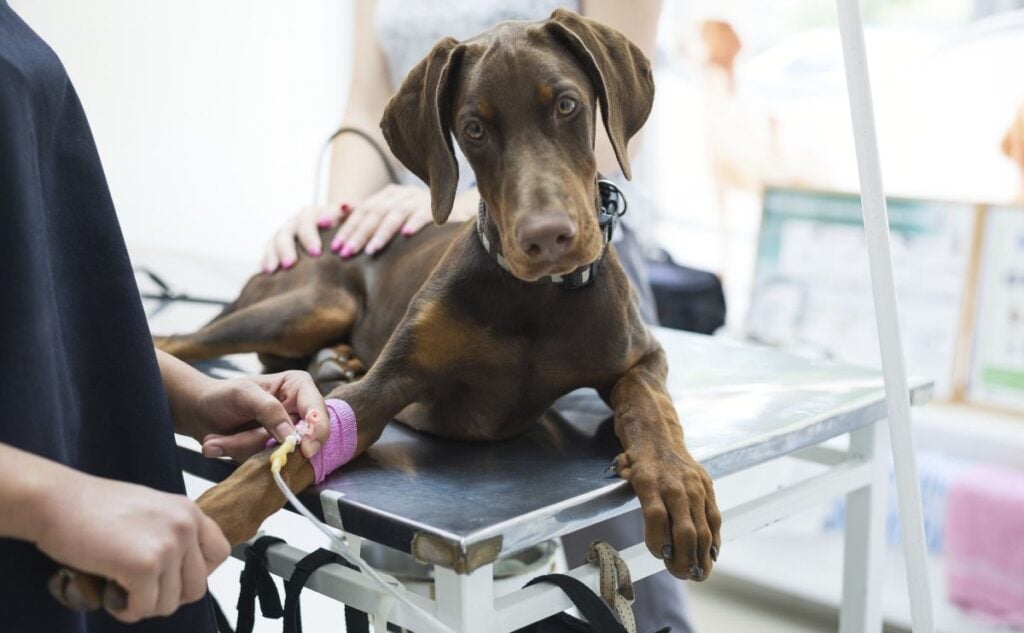
Name Your Vet If Urge for food Loss Comes With These Signs
It is best to contact your veterinarian promptly in case your canine’s refusal to eat is paired with any of the next:
Not ingesting water
Repeated vomiting or nausea
Diarrhea or constipation
Lethargy or weak point
Unexplained weight reduction
Ache, whining, or discomfort
Coughing, gagging, or labored respiration
Habits adjustments, resembling hiding or withdrawal
These indicators counsel that urge for food loss could also be linked to sickness, ache, or dehydration that wants medical remedy.
Time Issues Extra Than Many Homeowners Notice
Even with out extra signs, time alone could be a purpose to name the vet.
24 hours with out consuming warrants shut monitoring
48 hours with out consuming or ingesting ought to set off a veterinary go to
Any refusal in puppies, seniors, or medically fragile canines ought to be addressed sooner
It’s At all times Okay to Name and Ask
Many pet house owners fear about overreacting. However calling your vet doesn’t imply committing to costly exams or remedy. It merely means getting steerage on whether or not house care is suitable.
When Pet Insurance coverage Can Assist
In case your canine’s urge for food loss results in a vet go to, pet insurance coverage can take numerous stress off an already aggravating state of affairs. Diagnostic exams like bloodwork, X-rays, ultrasounds, IV fluids to deal with dehydration, and drugs for nausea or an infection can add up rapidly.
Many pet insurance coverage assist cowl these prices when urge for food loss is tied to a brand new sickness, harm, or emergency, particularly if remedy escalates past a easy examination.
Pet insurance coverage is most useful once you don’t wish to delay care due to value issues. Urge for food loss is commonly one of many first indicators of a much bigger concern, and having protection could make it simpler to say sure to testing or remedy sooner fairly than ready it out.
Simply do not forget that most plans don’t cowl pre-existing situations, so insurance coverage works finest when it’s in place earlier than issues begin—not after your canine is already sick.
See our skilled’s information on one of the best pet insurance coverage suppliers to see how they evaluate and whether or not insuring your pup is definitely worth the funding in your canine’s well being.
Often Requested Questions
In case your canine isn’t consuming, you’re not alone. These are the commonest questions canine house owners ask when meals instantly turns into uninteresting to a pup who often by no means misses a meal. Don’t see yours right here? Ask us in our feedback.
When Shouldn’t I Feed My Sick Canine?
In case your canine has been vomiting or has energetic diarrhea, it’s often finest to attend not less than 12 hours after the final episode earlier than providing meals once more. Feeding too quickly can irritate the abdomen and set off vomiting once more.
If vomiting or diarrhea lasts longer than 24 to 48 hours or worsens, veterinary care is required. Vital: Water ought to nonetheless be supplied throughout this time until your vet advises in any other case.
How A lot Ought to I Feed My Sick Canine?
There is no such thing as a one-size-fits-all quantity. When canines are sick, small parts supplied often are simpler to tolerate than full meals.
An excellent strategy:
Provide a couple of bites
Wait a couple of hours
Cease in case your canine turns away
Let your canine information the tempo. Forcing meals usually backfires and may worsen nausea.
Ought to You Pressure-Feed A Sick Canine?
Pressure-feeding ought to by no means be the primary possibility.
Syringe feeding could also be beneficial in some circumstances, however solely after a veterinarian has evaluated your canine and given clear directions. Feeding incorrectly could cause aspiration, which is harmful and generally life-threatening.
In case your canine has gone 48 hours with out consuming, the most secure course is to hunt medical steerage, not power.
Can House Treatments Exchange a Vet Go to?
House treatments for a canine’s urge for food can assist in delicate, short-term conditions, resembling transient abdomen upset or stress. They aren’t meant to interchange veterinary care when signs persist.
Nonetheless Frightened About Your Canine’s Consuming Habits?
In case your canine’s urge for food points are a part of a much bigger sample, these guides could assist you determine what’s occurring subsequent and when to behave:
In case you’ve been via this along with your canine earlier than, what helped them begin consuming once more? Share your expertise within the feedback. Your story could assist one other apprehensive canine proprietor scrolling for solutions late at night time.


